
Fried Chicken, The GOAT of Them All
There are foods that announce themselves with trumpets—foams, tweezers, smug little dots of sauce arranged like modernist art—and then there is fried chicken, which kicks the door open, wipes its boots on the rug, and dares you not to love it.
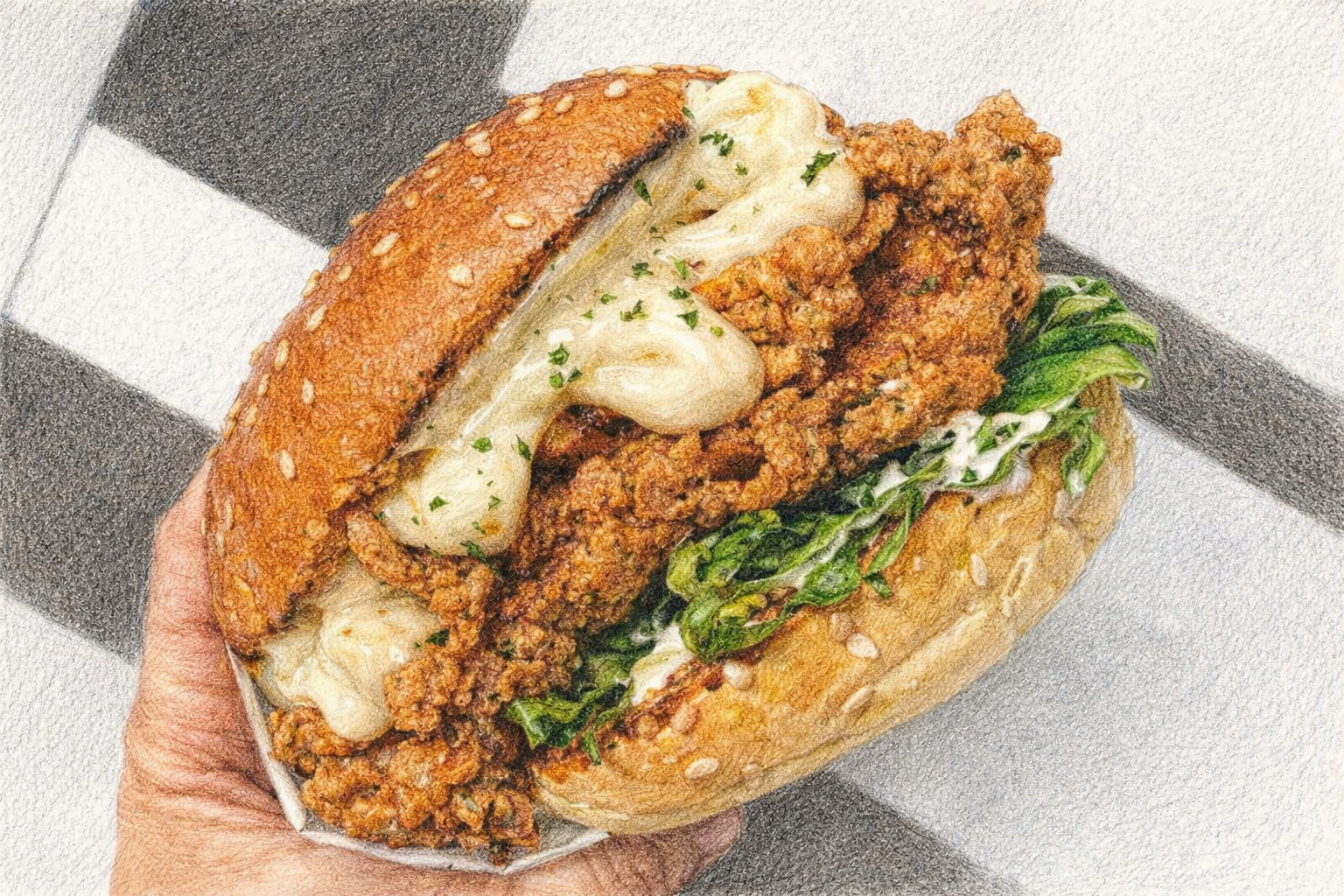
Fried chicken is not subtle. It doesn’t whisper terroir or suggest provenance. It crackles. It drips. It leaves evidence. You eat it with your hands because forks are a lie in this situation, and because somewhere deep in the animal part of your brain you know that this food predates manners, seating plans, and the pretense that we are anything other than clever mammals who learned how to use fire and oil.
The first bite is always the truth-teller. That shattering crunch—audible, undeniable—followed by steam, salt, fat, and the tender surrender of meat that has been waiting patiently beneath its armor. This is engineering, not accident. Somebody, somewhere, figured out that a bird, seasoned properly, dredged or battered with intent, and dropped into hot oil at exactly the right moment, could produce joy. Not fleeting pleasure. Joy. The kind that interrupts conversation and forces a brief, reverent silence at the table.
Fried chicken is democratic in the best possible way. It shows up everywhere worth being. Gas stations in the American South, Korean storefronts glowing at midnight, backyard cookouts where uncles argue about politics and everyone agrees on the chicken. It crosses borders without a passport and adapts shamelessly—gochujang-glazed, dusted with peri-peri, soaked in buttermilk, baptized in hot sauce. Every culture that encounters it says, “Yes, but what if we made it our way?” And every culture is right
There is also something deeply honest about fried chicken’s lack of pretension. You can plate it on enamel trays, newspaper, chipped porcelain, or a white tablecloth that will never be the same again. It doesn’t care. It doesn’t need a sommelier, though it welcomes cold beer, cheap champagne, sweet tea, or whatever you’ve got within arm’s reach. It’s not interested in being elevated. It’s already where it needs to be.
And let’s talk about the mess. Fried chicken insists on consequences. Greasy fingers. Salt on your lips. A napkin that loses the fight. This is not food for people afraid of pleasure or control. This is food that asks you to lean in, accept imperfection, and understand that the best things in life tend to leave a mark.
In a world increasingly obsessed with optimization—with food engineered to be efficient, photogenic, and safe—fried chicken remains gloriously reckless. It is indulgent. It is excessive. It is absolutely worth it. It reminds us that eating is not just fuel but ritual, comfort, rebellion, and community. That sometimes the correct response to a long day, a bad year, or an uncertain world is hot oil, crispy skin, and a shared bucket placed in the center of the table like an offering.
You don’t need to overthink fried chicken. You just need to respect it. Eat it hot. Eat it with people you like. And for a brief, perfect moment, let it be enough.
