
Dining is Really All About the Experience
Dining is all about experience. That’s the lie and the truth, knotted together like cheap headphones pulled from a pocket. You hear it repeated by people who’ve never worked a line, never bled into a cutting board, never smoked behind a dumpster at 1 a.m. while reconsidering every life choice that led them there. And yet—annoyingly, inconveniently—it’s true.
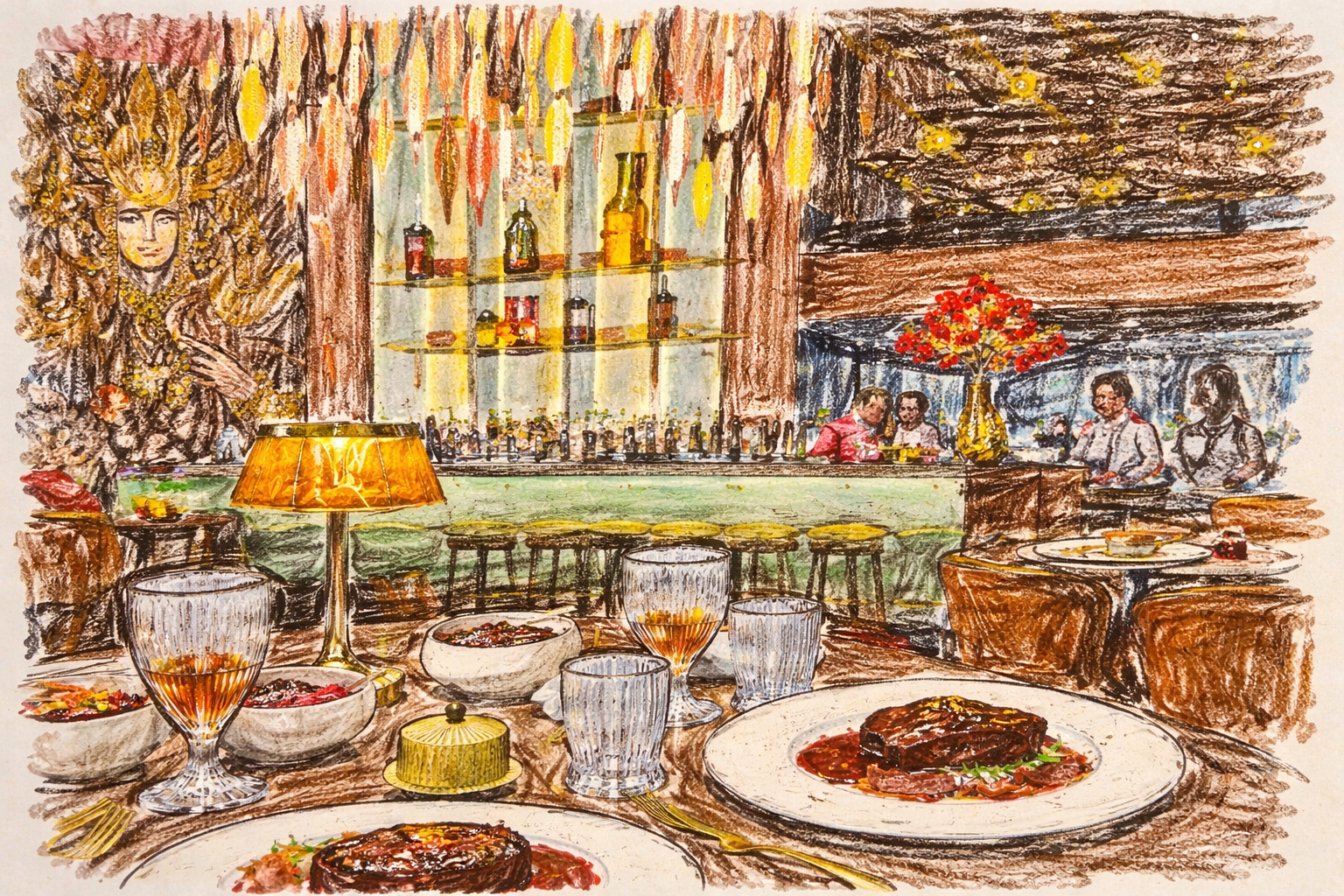
The food matters, of course. Anyone who tells you otherwise is selling candles or running a branding workshop. But food alone has never been enough. A perfect dish eaten in the wrong room, at the wrong time, with the wrong people, can taste like disappointment. I’ve had transcendent meals served on chipped plates in places that barely qualified as buildings, and I’ve eaten technically flawless food in dining rooms so sterile they felt like waiting rooms for the afterlife.
Experience is the multiplier. It’s the thing that turns calories into memory.
We don’t remember meals the way we remember recipes. We remember who we were with. We remember the heat, the noise, the exhaustion, the jet lag, the argument that happened ten minutes before the appetizer arrived. We remember the waiter who hated us, or the one who saved the night with a free drink and a raised eyebrow that said, I know, I’ve been there too.
Dining is theater, and everyone is acting, whether they admit it or not.
The restaurant wants to be seen as something—authentic, elevated, rebellious, comforting. The diner wants to feel something—important, adventurous, at home, forgiven. Somewhere between those two agendas, a meal happens. When it works, it’s magic. When it doesn’t, you get foam.
The obsession with “experience” has, of course, been weaponized. Now we have playlists engineered to manipulate your spending habits, lighting designed by consultants who’ve never cooked an egg, and menus that read like poetry written by an algorithm that once glanced at a farm. The experience becomes so aggressively curated that it leaves no room for accidents—and accidents are where the good stuff lives.
A great dining experience isn’t smooth. It’s human.
It’s the cook who comes out sweaty and defensive to explain why the dish is the way it is. It’s the power going out mid-meal and everyone laughing because there’s nothing else to do. It’s the language barrier that turns ordering into charades and somehow makes the food taste better because you worked for it.
Experience is context. A bowl of noodles at 3 a.m. after a bad day can hit harder than a tasting menu you booked three months in advance. Street food eaten standing up, plastic bag sweating in your hand, can carry more emotional weight than linen tablecloths ever will. Hunger—real hunger, emotional or physical—changes everything.
And let’s be honest: mood is an ingredient.
If you’re lonely, food becomes company. If you’re in love, it becomes background music. If you’re grieving, it can either heal you or offend you deeply, sometimes both in the same bite. The same dish, prepared the same way, can feel entirely different depending on the state you’re in when it arrives.
That’s why reviews are mostly useless. You’re not the reviewer. You’re not in their body, their head, their moment. You don’t know if they’d just gotten bad news, or fallen in love, or missed their flight. Dining doesn’t happen in a vacuum; it happens in real life, which is messy and unfair and frequently drunk.
The best meals I’ve ever had weren’t about luxury. They were about generosity. Someone feeding you because that’s what you do for people. Someone proud—not performatively proud, but quietly, stubbornly proud—of what they put in front of you. Someone saying, without words, This is us. This is what we have. Sit down.
That’s the experience we keep chasing, whether we know it or not.
Not perfection. Not exclusivity. Connection.
So yes, dining is all about experience—but not the kind you can package, brand, or upsell. It’s about time and place and people. It’s about showing up open, a little vulnerable, willing to let a meal be more than fuel. Willing to let it be a moment.
And moments, unlike menus, don’t repeat.
