
The Unending Struggle with Cigarettes
I didn’t start smoking because I was reckless or romantic or particularly broken. I started because, sometime around 2019, it folded itself neatly into my day. It arrived without drama. One pack became a habit the way a side towel becomes part of a uniform—you don’t remember the first time you reached for it, only that eventually you can’t work without it.
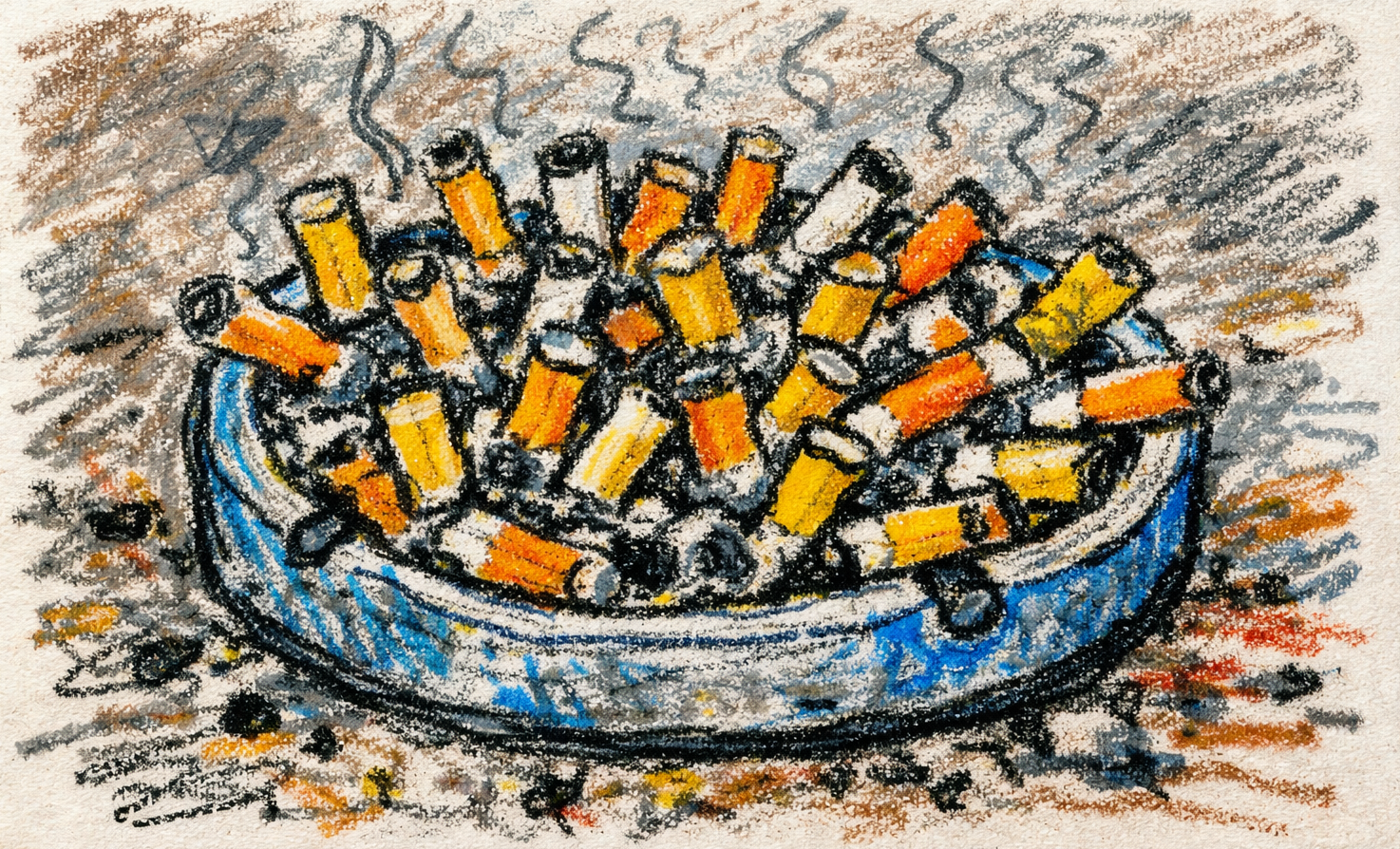
In kitchens, smoking isn’t rebellion. It’s logistics.
There’s a window between lunch service and prep where the noise drops out. The tickets stop printing. Someone leans against the back door. You step outside, still warm from the line, smelling like oil and salt and onions that have gone just a shade too far. You light a cigarette not because you’re desperate for nicotine but because this is what a break looks like here. This is the punctuation mark between chaos and the next round.
I didn’t think of it as addiction. Addicts, in my mind, needed cigarettes the way a drowning man needs air. I only smoked when I was stressed. Or when things slowed down. Or when my hands didn’t know what to do with themselves. Which is to say: often, but not enough to alarm myself.
Years passed like that. Quietly. Efficiently. The way kitchens grind time into muscle memory. I didn’t count packs. I counted services. Seasons. New menus. Old coworkers disappearing without goodbye. Somewhere along the way, the cigarette stopped being a choice and started being a conclusion. Service ends, cigarette. Bad shift, cigarette. Good shift, especially a good shift, cigarette. Satisfaction, not relief—that’s the lie that kept me loyal.
I’ve never seriously tried to quit. I’ve flirted with the idea. Thought about alternatives the way people think about moving to a different city when they’re unhappy—comforted by the fantasy, unchanged by the thought. I told myself I wasn’t ready. Or that now wasn’t the right time. Or that there were worse things to be addicted to. All true. All irrelevant.
What’s unsettling isn’t the damage—at least not yet. It’s the way smoking slipped into the background of my life and stayed there, dependable as stainless steel. I don’t smoke to feel alive. I smoke to mark time. To give my stress a shape. To claim a small, controlled pause in a job that doesn’t care how tired you are.
This isn’t a confession. Confessions imply regret sharp enough to cut something loose. This is more like recognition. Acknowledging that something I thought was temporary has outlived my excuses. That a habit born in the margins of my day now knows me better than I’d like.
I still step outside. I still light up. I still tell myself I’m fine.
But I’m no longer pretending I don’t know what this is.
